

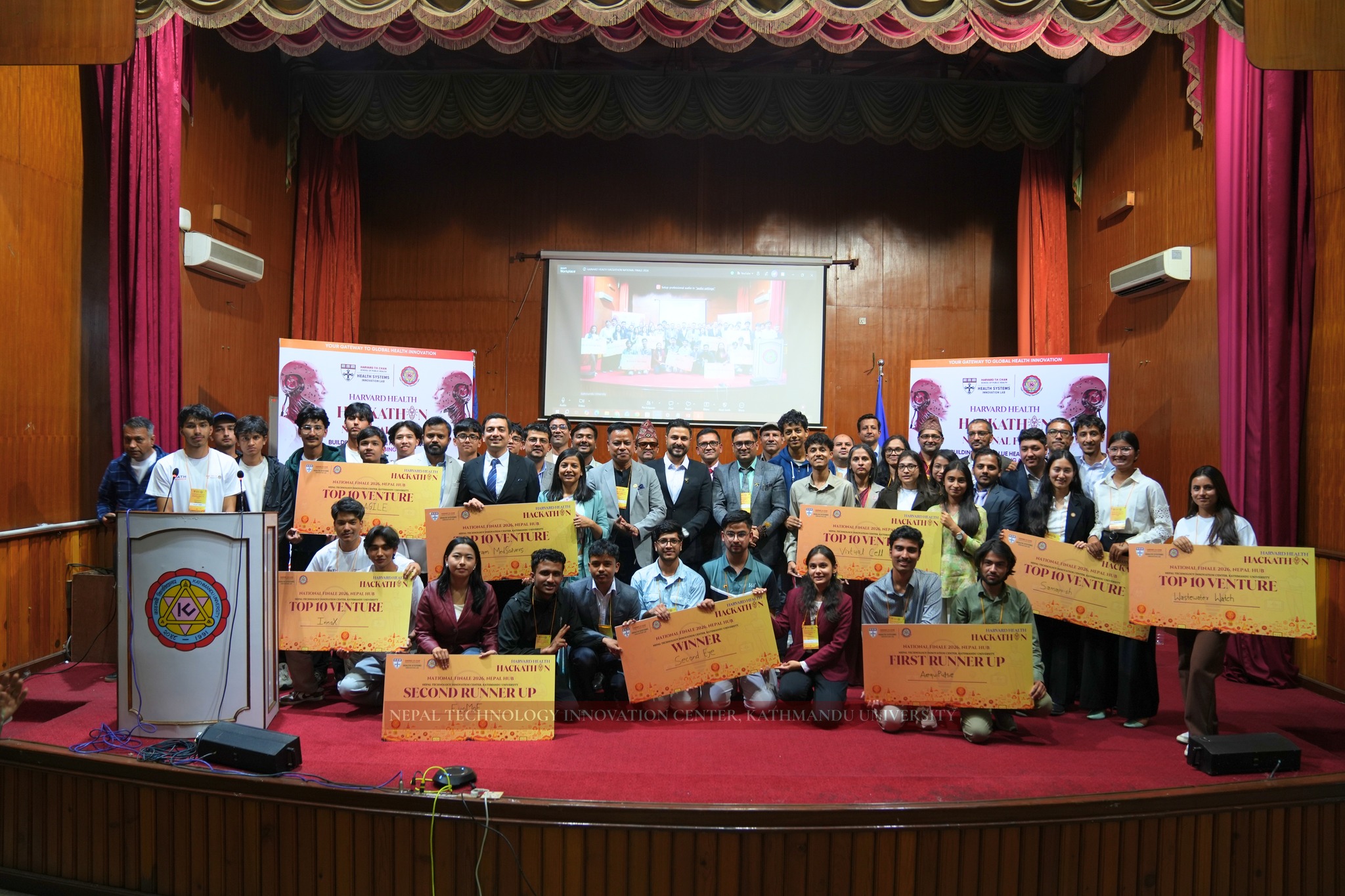
Kavre- Nepal has entered a new phase in health innovation with the successful host of its first Harvard-linked Health Hackathon, held at Kathmandu University by the Nepal Technology Innovation Center (NTIC). The event marks Nepal’s debut in a global network of health innovation platforms inspired by leading institutions.
Organized under the Health Systems Innovation Lab, the two-day hackathon brought together young innovators from across the country to tackle critical healthcare challenges using technology. Participants focused on solutions in artificial intelligence, accessibility, and improving system-wide efficiency.
The event kicked off on April 10, drawing high-level participation from academia, development partners, and the investment community. Among those present were Kathmandu University Vice-Chancellor Prof. Achyut Wagle, U.S. Embassy representative Mike Harker, KOICA Nepal’s Choong Hee, and Dolma Impact Fund’s Tim Gocher. Health and academic leaders, including Dr. Bishal Dhakal and Dr. Biraj Man Karmacharya, along with university officials and partners, also attended.
Calling the event a milestone, NTIC Director Prof. Bim P. Shrestha said it represents a “defining moment” for Nepal’s innovation ecosystem. More than 400 teams from across the country initially participated, with 47 advancing through regional selection rounds to compete in the national finale. Finalists delivered high-impact ideas through concise three-minute pitches.
Dr. Sanjiv Gupta, Chief of Innovation at NTIC, noted that the quality of participation reflects Nepal’s growing capacity to compete at an international level.
A jury led by Dr. Nitin N. Bhandari, alongside experts from organizations such as PATH, Kathmandu University School of Management, and Dhulikhel Hospital, selected the top teams.
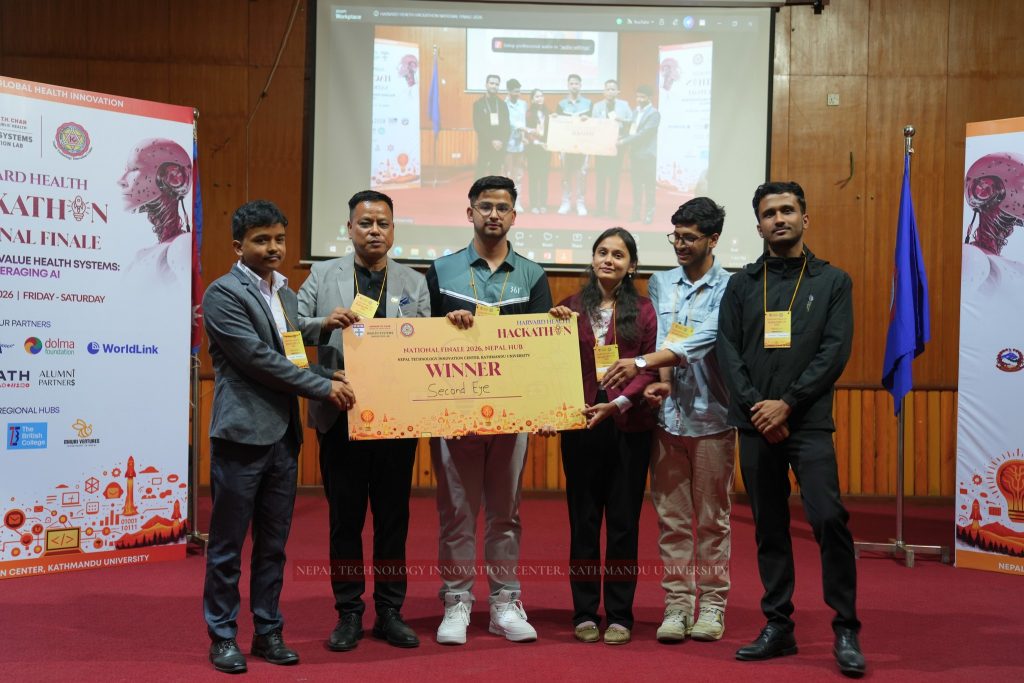
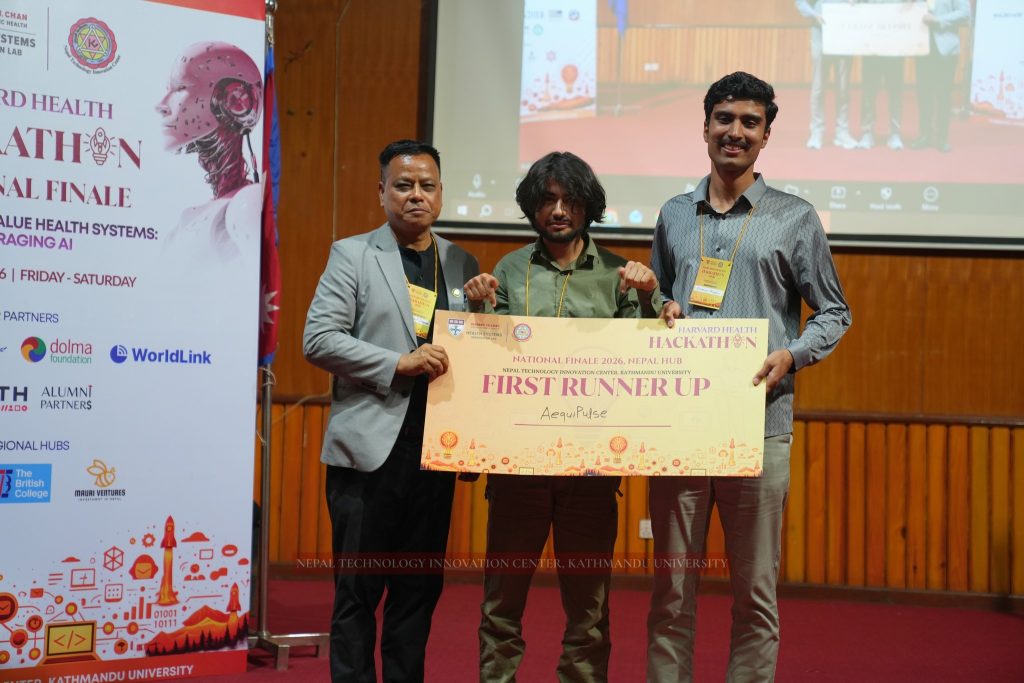
Team “Second Eye” emerged as the winner, followed by “AequiPulse” as first runner-up and “EvoMoE” as second runner-up. In addition, 20 promising startups were named “Top Ventures to Watch,” while 10 teams will receive continued mentorship and support.
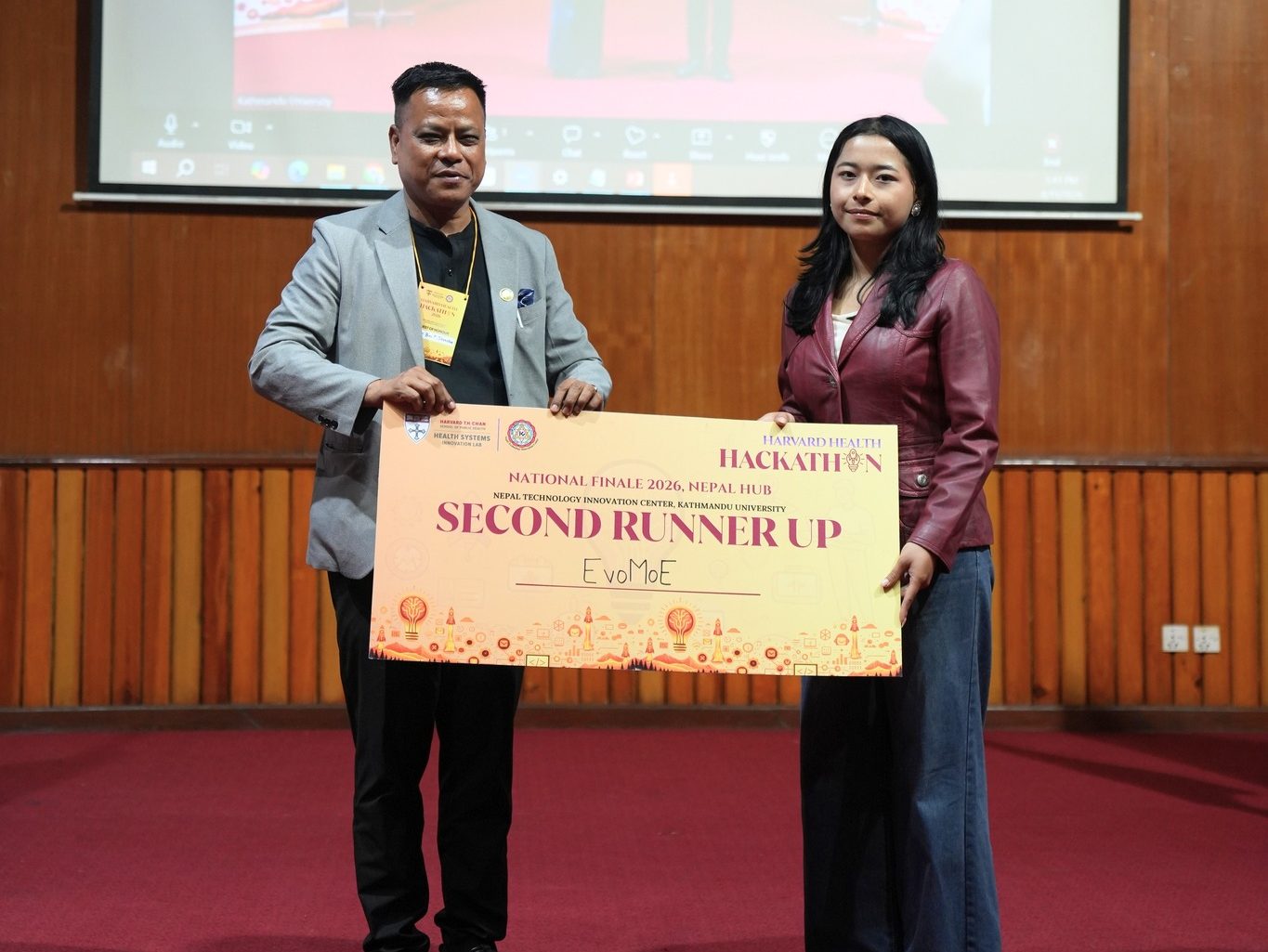
The top three teams will represent Nepal in the international round, competing with global innovators for a place in the final showcase in Boston.
NTIC has been strengthening partnerships with leading global institutions, including Harvard, Stanford, and MIT, and has invited organizations across Nepal to host future innovation hubs.
The successful launch of the hackathon signals a major step forward for Nepal’s health-tech ecosystem, opening new opportunities for collaboration, investment, and scalable innovation.

Happy

Sad

Wonderful

Excited

Angry