
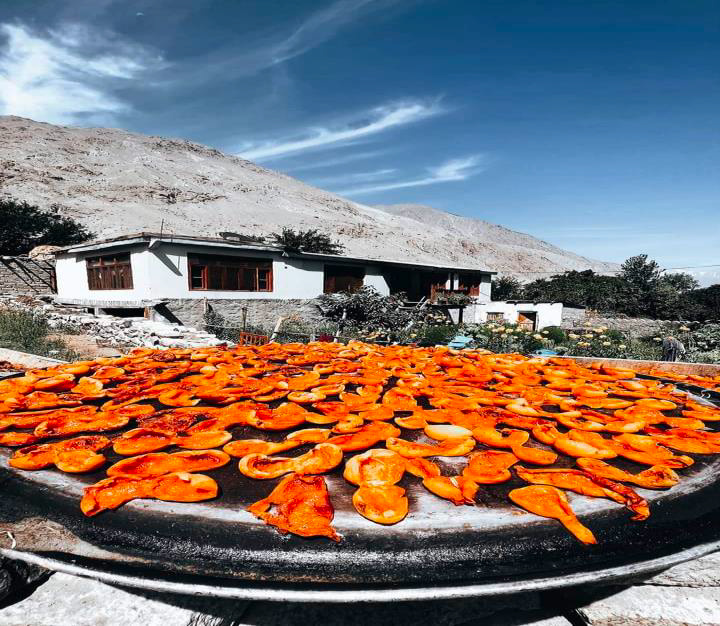
Gilgit-Baltistan, Pakistan – Kowardu, a densely populated and fertile village located along the banks of the Indus River, lies just half an hour from Skardu City. Despite its agricultural potential, farmers struggled with traditional farming methods and inadequate facilities for drying their produce.
Fruits like apricots, grapes, apples, and pears, alongside vegetables such as onions, carrots, and tomatoes, were sold at low prices because farmers relied on substandard drying methods, using rooftops, stones, or cardboard. These practices affected the quality and marketability of their apricots, reducing income potential.
The transformation began with the implementation of the APFP-FO4A program and the ARISE Loan Program by the Agribusiness Support Fund (ASF) Pakistan. These initiatives empowered local farmers by providing technical training, financial assistance, and awareness about modern apricot drying techniques. Farmers were introduced to sulfur treatment and advanced drying methods, which revolutionized apricot processing in Kowardu.
Farmers adopted modern practices, increasing the selling price of apricots from just PKR 70–80 (USD 0.25 to 0.28) per kilogram to PKR 300 (USD 1.07) per kilogram. The local cooperative society capitalized on these advancements, selling 65,000 kilograms of dried apricots through tenders and earning over PKR 10 million (USD 35, 971).
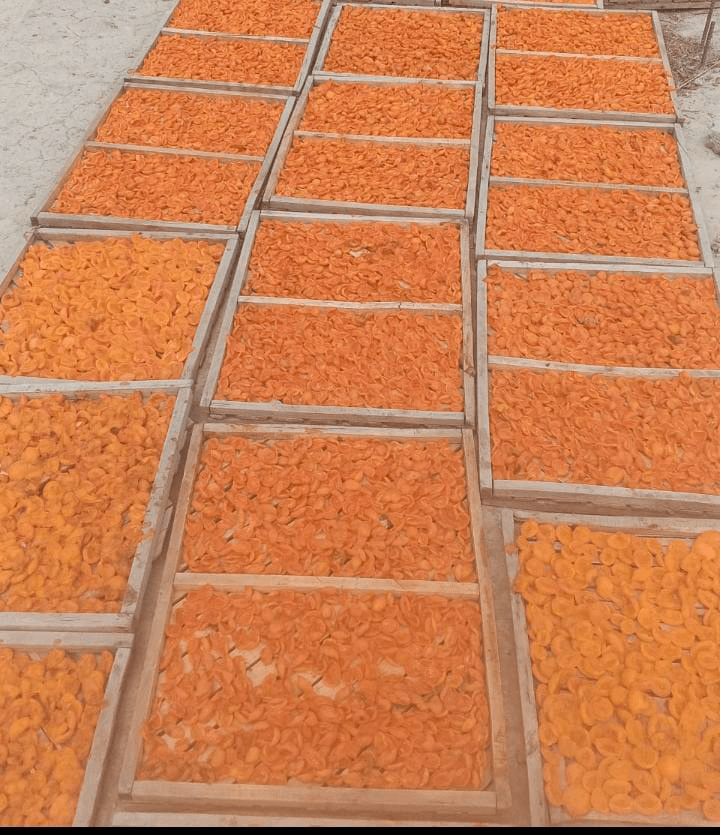
From this revenue, PKR 1 million (USD 3,597) was contributed to a revolving fund to sustain future activities. With growing expertise and improved practices, the society projects even higher earnings this year, surpassing the previous year’s achievements.
The APFP-FO4A and ARISE programs have not only elevated the financial status of farmers in Kowardu but also demonstrated the transformative power of modern agricultural practices in unlocking the true potential of rural livelihoods.
The Asia-Pacific Farmers’ Program (APFP) – Farmers’ Organizations for Asia (FO4A) is implemented by the Asian Farmers’ Association for Sustainable Rural Development (AFA) and La Via Campesina (LVC), with funding from the European Union (EU) and the International Fund for Agricultural Development (IFAD). The program aims to strengthen the capacities of farmers’ organizations to provide economic services, advocate for enabling policies, and promote sustainable livelihoods for small-scale family farmers across Asia.
The Assuring Resiliency of Family Farmers (ARISE-Farmers) program was first launched in response to the COVID-19 pandemic, aiming to empower farmers’ groups to meet their members’ needs and ensure food security during the crisis. The succeeding phase of the program continues its mission to help family farmers become more resilient and self-reliant.
It focuses on strengthening the capacities of farmers’ organizations (FOs) to manage production support for their members while expanding partnerships with governments, private sector actors, and financial institutions. Through this approach, ARISE addresses the persistent financing gap and helps smallholder farmers gain better access to markets. (APFP)

Happy

Sad

Wonderful

Excited

Angry