
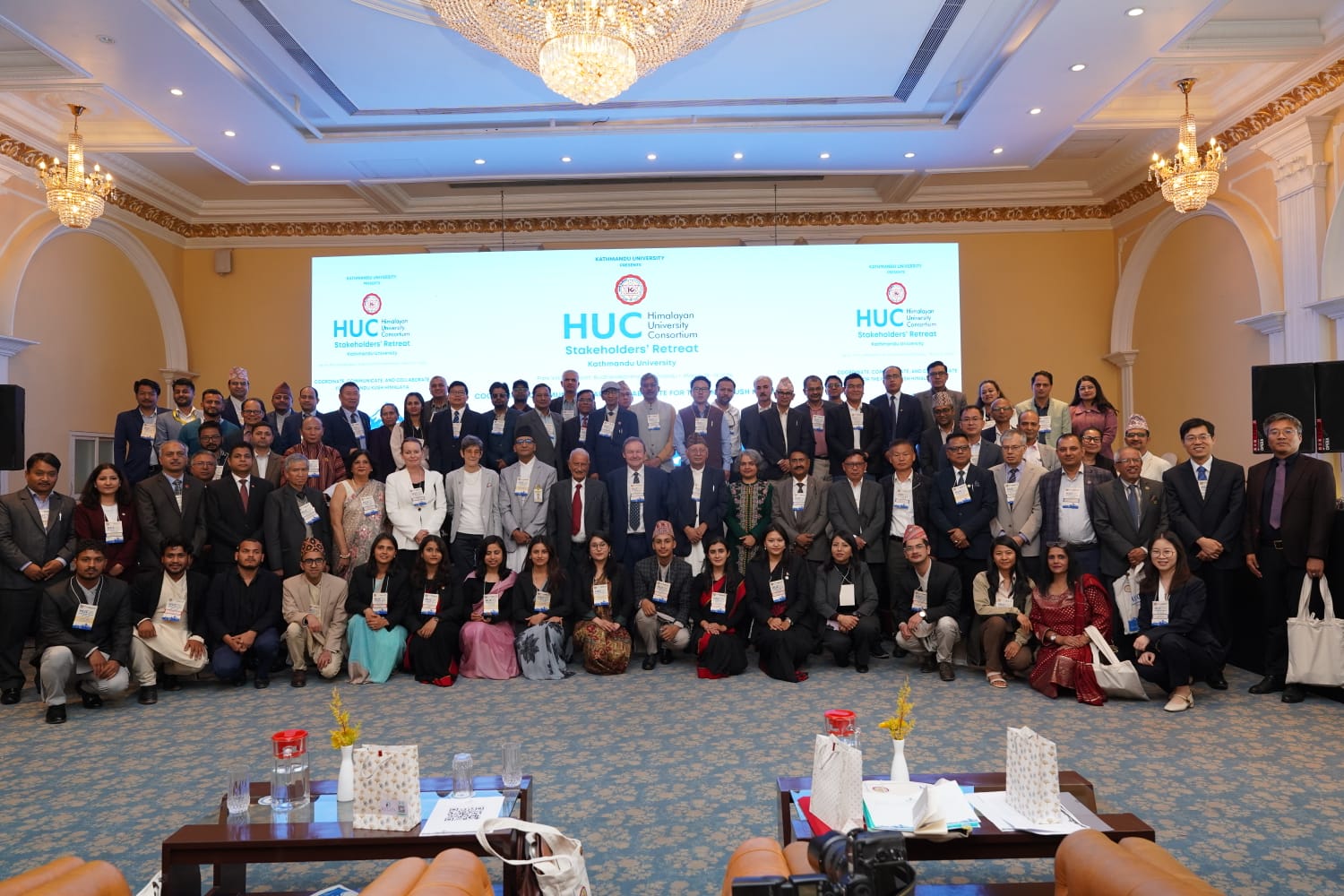
Kathmandu- The Himalayan University Consortium Stakeholders’ Retreat concluded on Thursday with the “Kathmandu Declaration”. Hosted by Kathmandu University (KU), the retreat brought together 70 international guests, including 29 Vice-Chancellors of the Hindu Kush Himalaya (HKH) region, to establish a roadmap for the future and ensure the financial sustainability of the Himalayan University Consortium (HUC) in a global, multilateral context. Participants from Thailand, India, China, Myanmar, Pakistan, and Bhutan attended the event.
Prof. Dr. Vibha Dhawan, Chancellor of The Energy and Resources Institute School of Advanced Studies, India, delivered the keynote address during the program. Prof. Dhawan emphasized bridging the gap between scientific research and traditional wisdom to build climate-resilient communities, ensuring that indigenous knowledge systems are integrated into a transboundary roadmap for the Hindu Kush Himalaya.
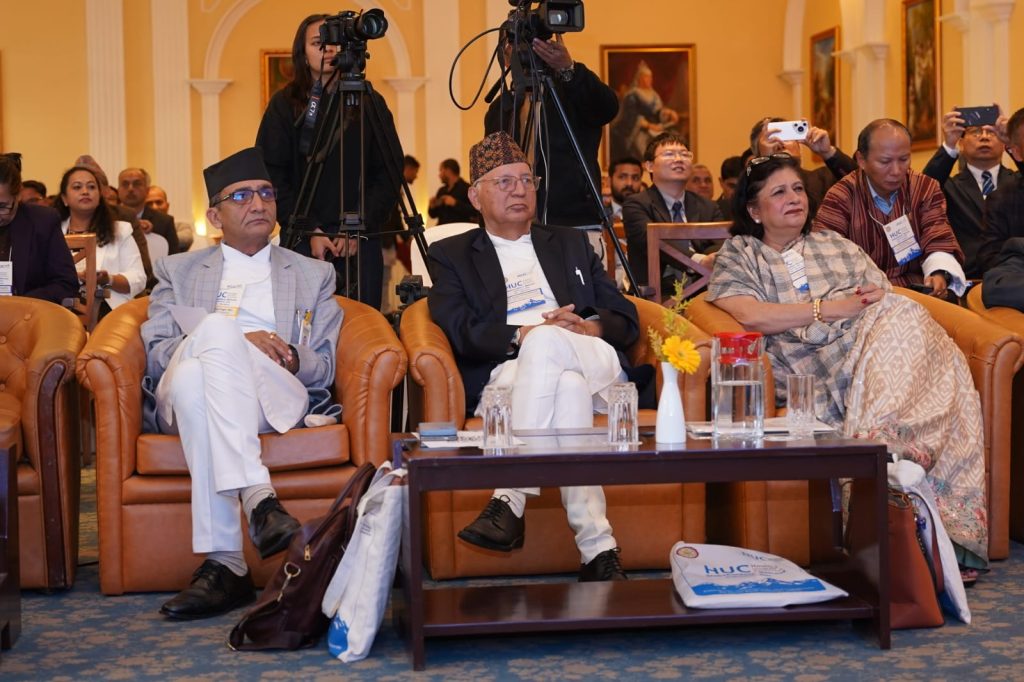
“By enhancing academic collaboration, universities can reverse environmental degradation and protect our global biodiversity hotspots from the escalating threats of the Anthropocene,” Prof. Dhawan said.
Dr. Ananda Mohan Bhattarai, a former justice of the Supreme Court, served as the event’s special guest. He called for moving beyond parochial laws to align with global legal frameworks, such as the Paris Agreement.
“We must protect the vital ecosystems like the Shivalik and Karnali regions and ensure that ecosystem service budgets reach local communities, and transform environmental conservation from a legal promise into a sustainable reality for the entire Hindu Kush Himalaya,” Bhattarai said.
Vice Chancellor of Kathmandu University, Prof. Achyut Wagle, highlighted that not only our ecology but the culture of our indigenous communities and the existing flora and fauna are under immense threat.
“It is the urgent responsibility of university scholars to utilize data-driven inferences to bridge the gap between academic research and effective policy-making to safeguard the Hindu Kush Himalaya,” said Professor Wagle.
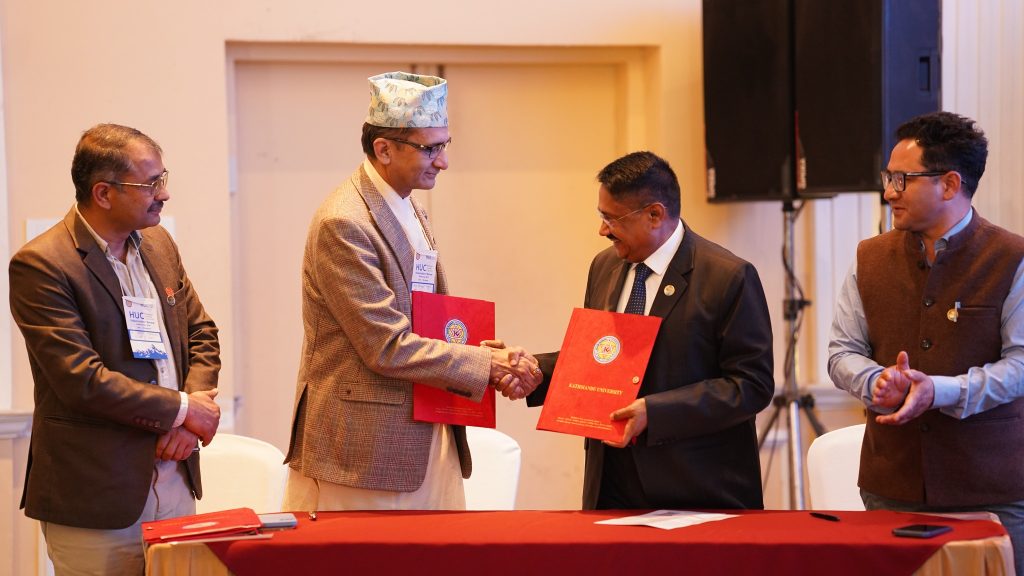
The participants deliberated on the pressing issues of the HKH region across seven technical sessions, including HUC’s financial sustainability, multilateral academic and research collaboration, HUC’s global positioning, and the initiation of a vice-chancellors’ forum for regional cooperation.
The retreat also organized a charter revision session, where various delegates and VCs from partner Universities worked together to harmonize the charter for future implementation. The Charter discussion was held among the stakeholders, and a draft was prepared on the second day. Further committee and byelaws will be prepared in line with the Charter.
The speakers focused on mutual collaboration in twelve thematic areas, including the Food-Energy-Water Nexus, Cryosphere and Society, Disaster Risk, Traditional and Indigenous Knowledge Systems, Climate Change and Carbon Neutrality, Mountain Agriculture, and the Green Economy. However, the technical sessions and critical overview led to a debate on reorganizing the thematic working areas, suggesting new focus areas such as AI, digital competency, and climate change law to bridge the gap between research and policy.
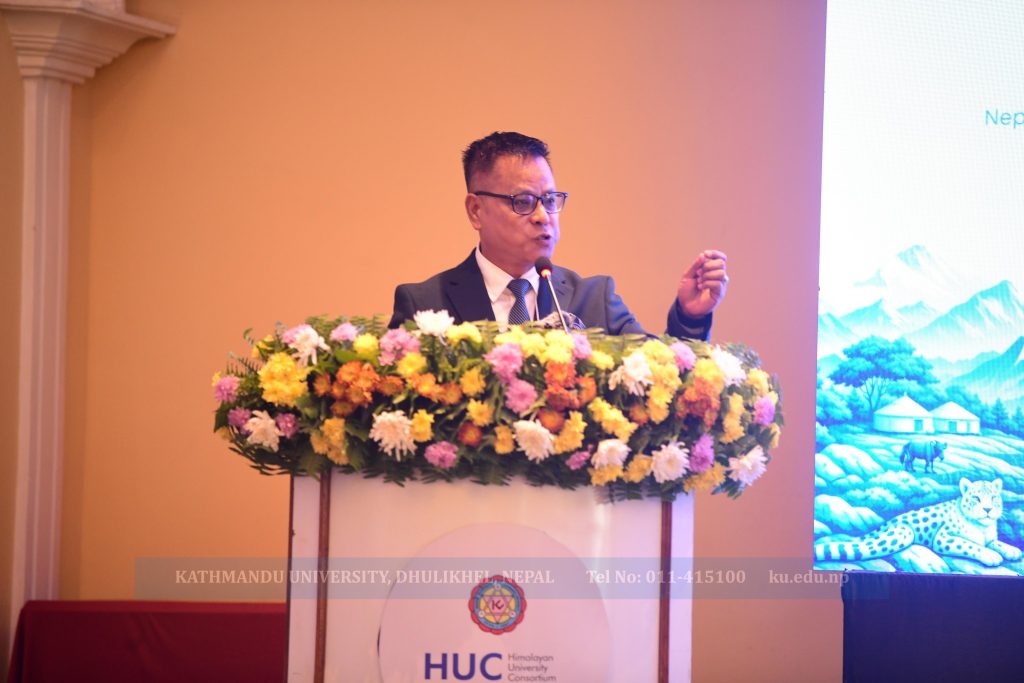
Kathmandu University maintained that the themes discussed during the retreat addressed the key challenges facing the region over the next several decades while promoting horizontal knowledge partnerships across the developing world. With a collective call for HUC to position itself as a global spokesperson for the Hindu Kush Himalaya, seeking to turn regional research into actionable policy and secure international climate financing for the 1.9 billion people dependent on the range’s water resources.
Practical solutions for mountain-specific challenges dominated the latter half of the session, with a strong call to transition from chemical-heavy agriculture to traditional, sustainable practices. Prof. Aasiso highlighted the success of experiential learning and community engagement, noting that degrees are now being extended to traditional healers and practitioners.
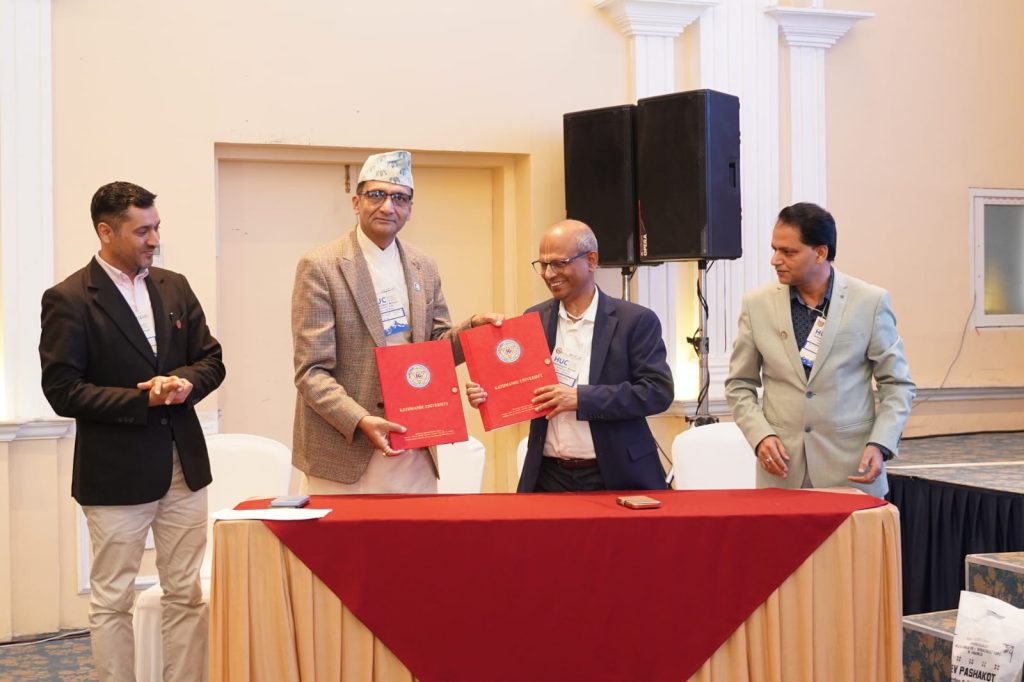
On the sidelines of the event, Kathmandu University signed memoranda of understanding with the Indian Institute of Technology-Mandi and the University of Ladakh, India, with the aim of conducting joint research on Himalayan ecology, culture, and transboundary Himalayan concerns.
Established in 2007, HUC is a consortium of 107 member universities from the HKH region. Initially hosted by the International Centre for Integrated Mountain Development, it was transferred to Kathmandu University in December of last year.
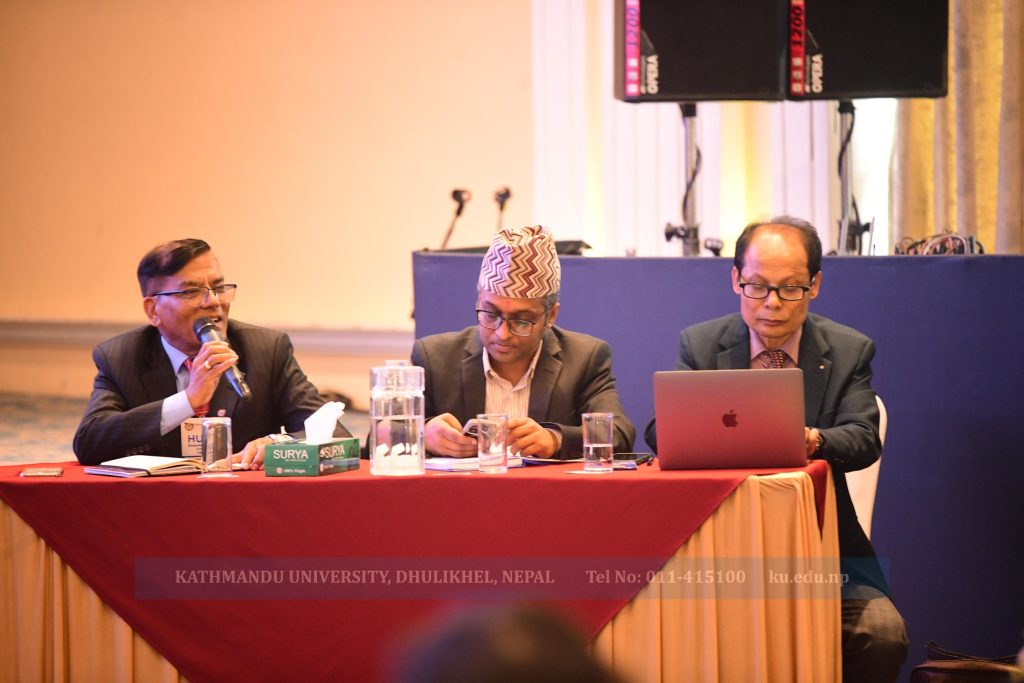
STAKEHOLDERS’ RETREAT 2026
KATHMANDU DECLARATION
The Hindu Kush-Himalaya (HKH), often regarded as “The Third Pole”, hosts 10 major river basins, eight nations, stretched over 3500 kilometer, supports nearly 25 percent of the world population – nearly 2 billion people living in the mountains and in low lands.
Realizing that HKH is warming faster than the global average, resulting in rapid glacier retreat, biodiversity loss, disruption of water cycles, and cross-regional environmental pressures, warrants urgent, coordinated, and synergistic actions among the nations to address them;
Recognizing that collaboration among higher education institutions and stakeholders in HKH region while supporting governments to develop appropriate laws, policies and solutions for climate justice, sustainable livelihood and environmental safety and recognizing people’s right to live in clean and safe environment;
Acknowledging that ICIMOD has been providing the legal cover, administrative support and funding for Himalayan University Consortium (HUC) programs since its founding in 2007, and now the HUC secretariat’s transition to Kathmandu University on December 10, 2025;
Reaffirming that HUC’s mandate is to produce the next generation of leaders, through research, education and collaboration, who understand the HKH specific mountains issues capable of developing resilient mountain solutions and the significance of regional cooperation to tackle them; and
Realizing that there is a critical need for integrated and collaborative multistakeholder approach to research and education, fully supported by the members and partners.
We, the Vice Chancellors, HUC members and partners from the HKH countries at the Himalayan University Consortium Stakeholders’ Retreat, held in Kathmandu, Nepal on March 18-19, 2026, have agreed to:
Adopted by the participating HUC members at the HUC Stakeholders’ Retreat held in the Park Village Resort, Kathmandu, Nepal on March 19, 2026.

Happy

Sad

Wonderful

Excited

Angry