
Kathmandu, Nepal — Students from the Kathmandu University School of Law are spearheading a wide-ranging Eco-Justice Initiative aimed at addressing environmental justice, community well-being, and governance challenges faced by settlements along the Roshi River corridor.
The student-led initiative adopts a multi-dimensional approach, combining field-based research, community outreach, environmental assessment, and policy engagement to generate evidence-driven action and inform future governance practices. By integrating academic inquiry with grassroots participation, the project seeks to amplify local voices while strengthening accountability in environmental decision-making.
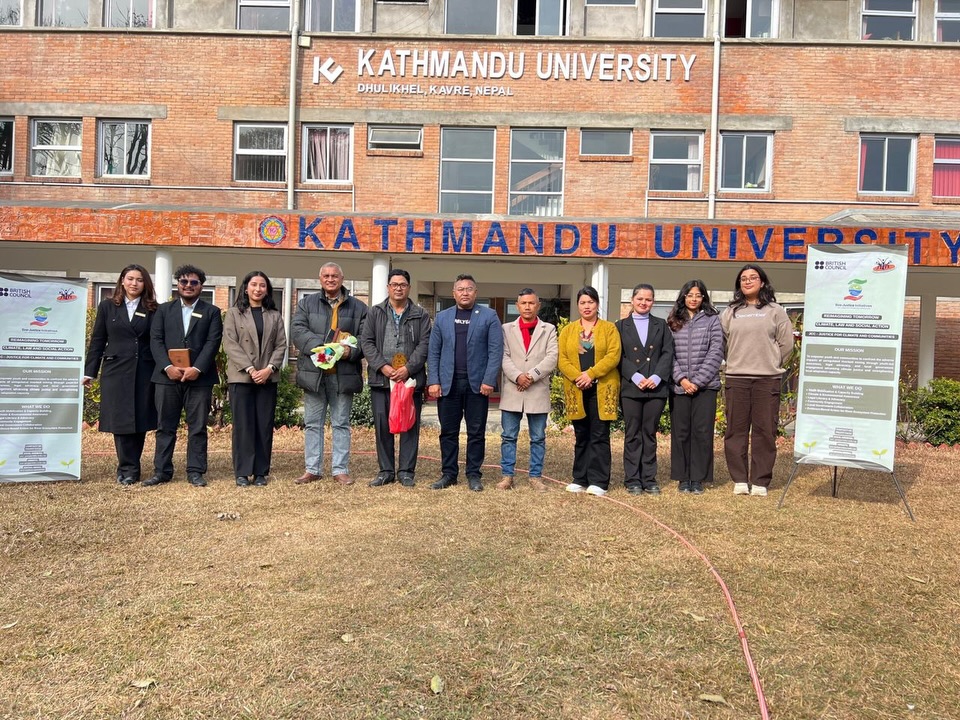
The initiative formally began with a panel discussion titled “Reimagining Tomorrow”, held at CV Raman Hall, Kathmandu University. The session brought together experts Sagar Dhakal, Tashi Lhazom, Arnab Chaudhary, and Prasuj Mainali, who explored themes of environmental justice, sustainable governance, and community empowerment. The discussion provided a conceptual framework for the subsequent fieldwork and advocacy components of the project.
Field engagement remains at the heart of the initiative. Law students conducted site visits to Kalati, Panauti, Banepa, and Bethanchwok, where they interacted directly with residents affected by environmental pressures such as unregulated stone and sand mining, river degradation, and air pollution.
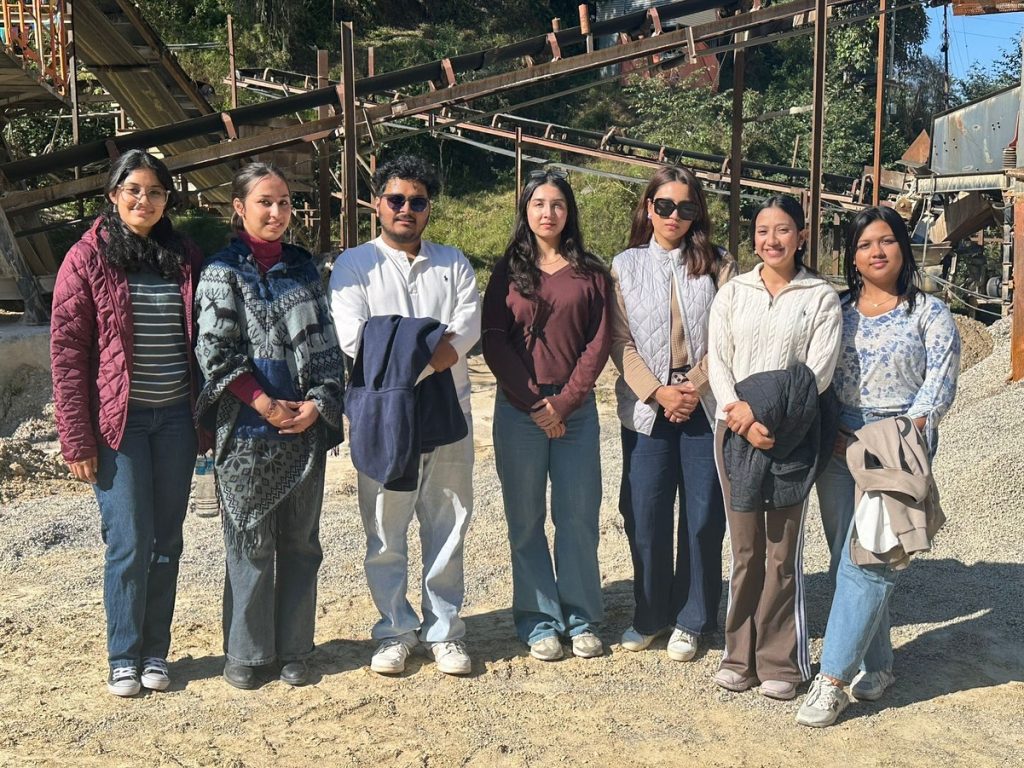
During these visits, the team carried out hands-on environmental assessments, including water quality testing, soil analysis, and air quality monitoring. The data collected is being used to document on-ground realities and support evidence-based advocacy efforts aimed at environmental protection and sustainable resource management.
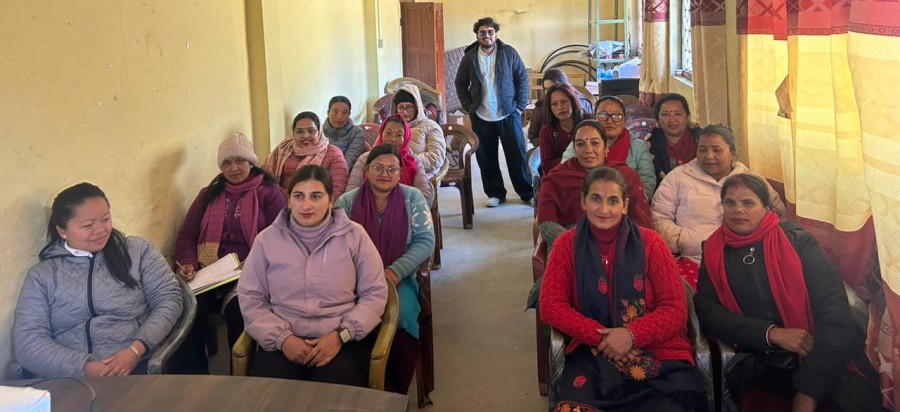
Recognizing the role of young people in shaping sustainable futures, the initiative has placed strong emphasis on education and youth engagement. Students conducted sessions in local schools focusing on environmental awareness, sustainability practices, and civic responsibility, encouraging learners to see themselves as active stewards of their environment.
To promote transparency and accountability, the student team has filed Right to Information (RTI) requests seeking official data on land use patterns, mining permits, and environmental governance practices. Responses received through RTI are feeding into ongoing research and facilitating informed dialogue with local authorities.
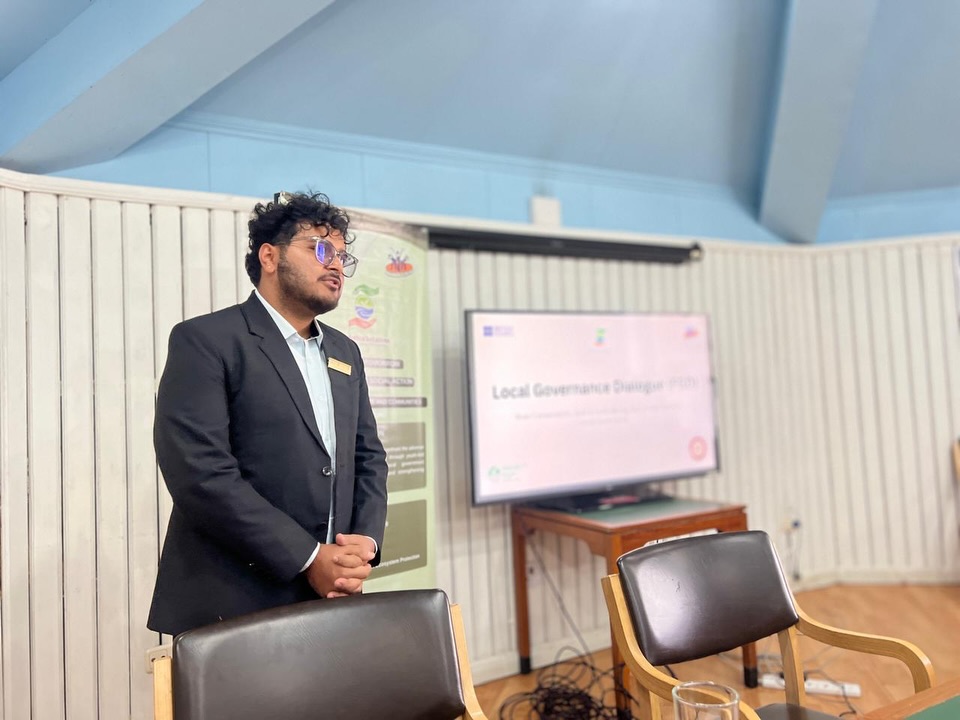
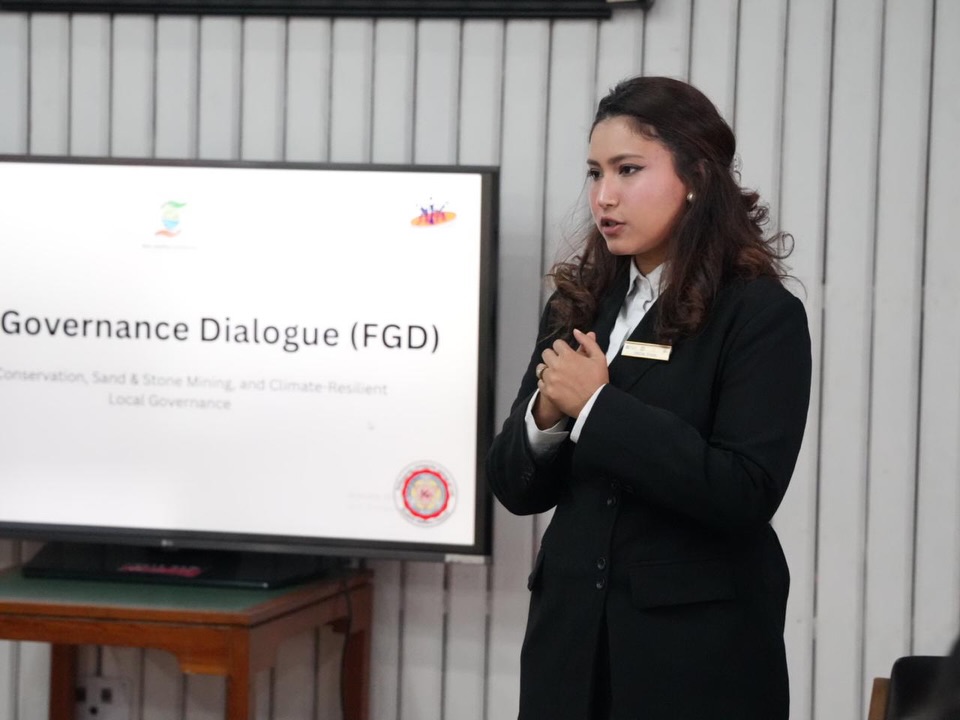
A Local Governance Dialogue was also organized, bringing together representatives from Bethanchok, Dhulikhel, Banepa, and Panauti municipalities. The forum enabled municipal officials, community members, and student researchers to discuss policy implementation, environmental safeguards, and collaborative strategies for sustainable development. Contributions from local leaders and distinguished guests underscored the importance of cooperative governance in addressing complex environmental challenges.
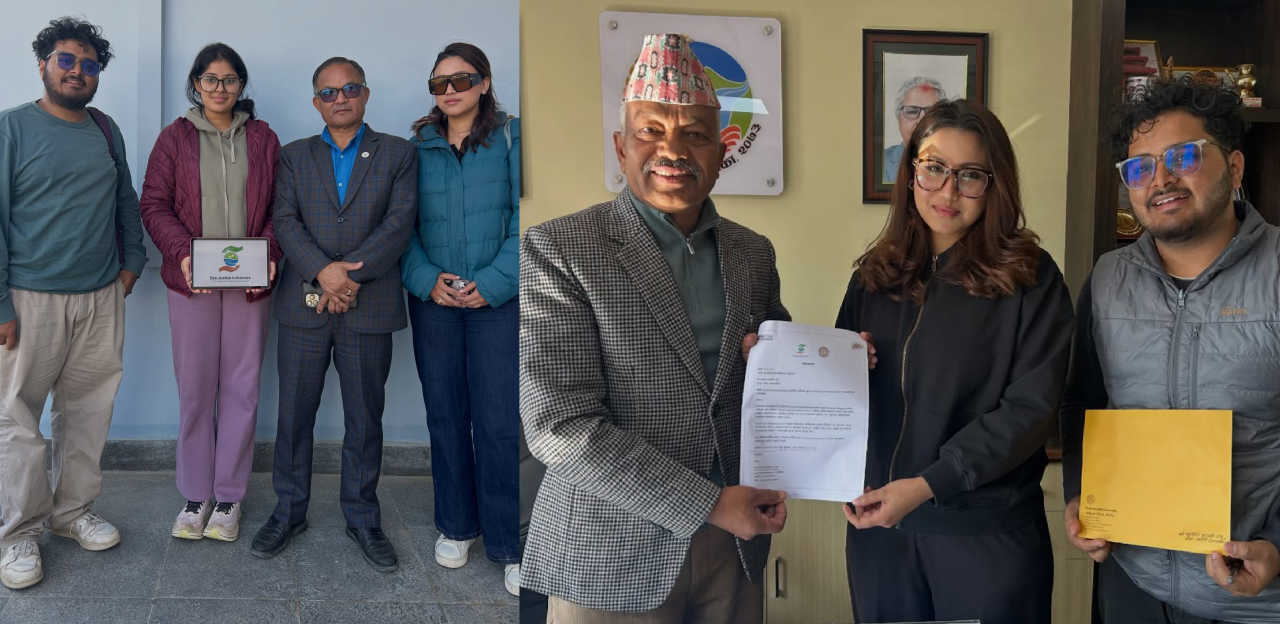
As part of its ongoing policy engagement efforts, the Eco-Justice Initiatives team also held a constructive meeting with the Mayor of Panauti Municipality, Mr. Ramsharan Bhandari. Project Lead Susan Sapkota and Co-Lead Crezal Thapa formally presented and submitted the findings of the team’s recent study conducted in Panauti.
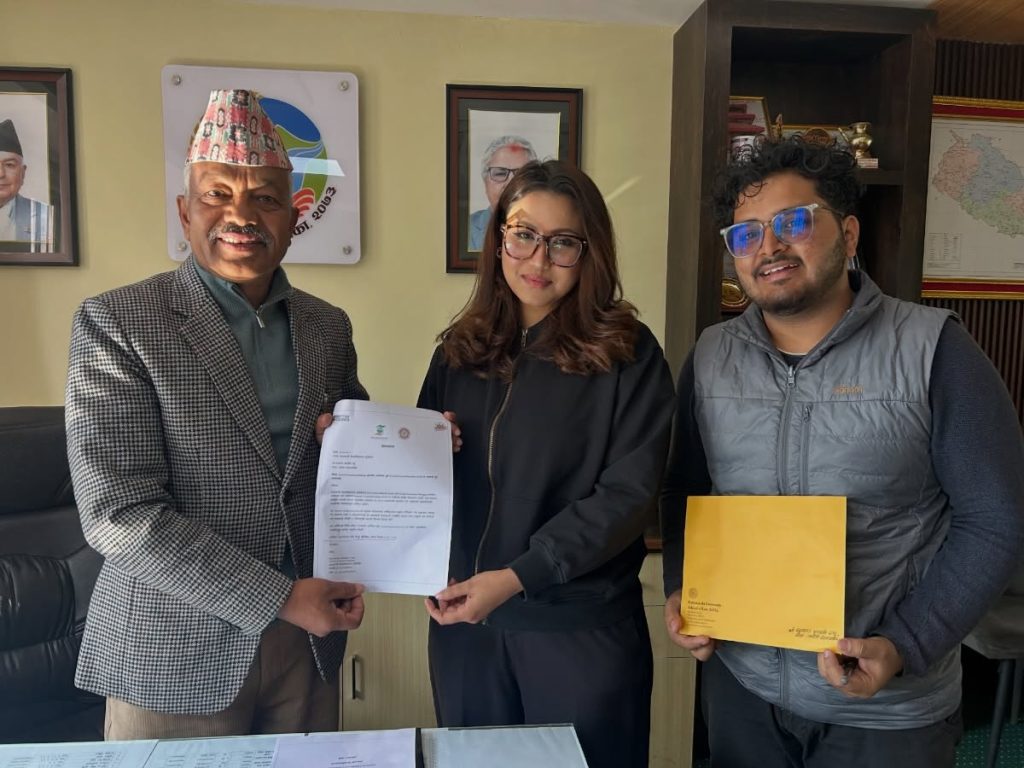
The Mayor warmly received the study report and assured the team that its findings would be taken into consideration in future municipal planning and decision-making processes. The discussion further emphasized the critical role of the Right to Information (RTI) in promoting transparent, accountable, and participatory local governance. The team welcomed the Mayor’s positive response and openness toward strengthening RTI practices at the municipal level.
The engagement reinforced the shared understanding that meaningful dialogue, shared responsibility, and collective action are essential to building environmentally just, resilient, and accountable communities.
To ensure broader public engagement, the team is producing a documentary film as part of a digital storytelling initiative. The documentary captures environmental conditions, community testimonies, and the lived experiences of residents along the Roshi River, serving both as an educational resource and an advocacy tool.
Looking ahead, the initiative plans to establish a Women’s Climate Champion Group, aimed at empowering women from local communities to take leadership roles in environmental advocacy, governance participation, and sustainable development initiatives.
Reflecting on the work, team member Saumya Dhungel said, “What inspires me most is the strength and resilience of the communities we are working with. Every visit reminds us that real change comes from listening to people, understanding their challenges, and working alongside them to protect their environment.”
Similarly, Crezal Thapa emphasized, “Our work is guided by the voices of the community. Seeing residents take ownership of environmental solutions shows that collaboration, not just intervention, is what truly drives impact.”
The Eco-Justice Initiative highlights the growing role of student leadership in bridging research, advocacy, and community engagement. As activities continue to evolve, the team aims to implement research-led interventions, deepen local partnerships, and support inclusive governance processes that advance environmental justice along the Roshi River.
Our work is guided by the voices of the community. When residents take ownership of environmental solutions, it becomes clear that collaboration—not top-down intervention—is what creates lasting impact,” said Susan Sapkota, Project Lead at Eco-Justice Initiatives.
The initiative is supported by the British Council and AYON.

Happy

Sad

Wonderful

Excited

Angry