
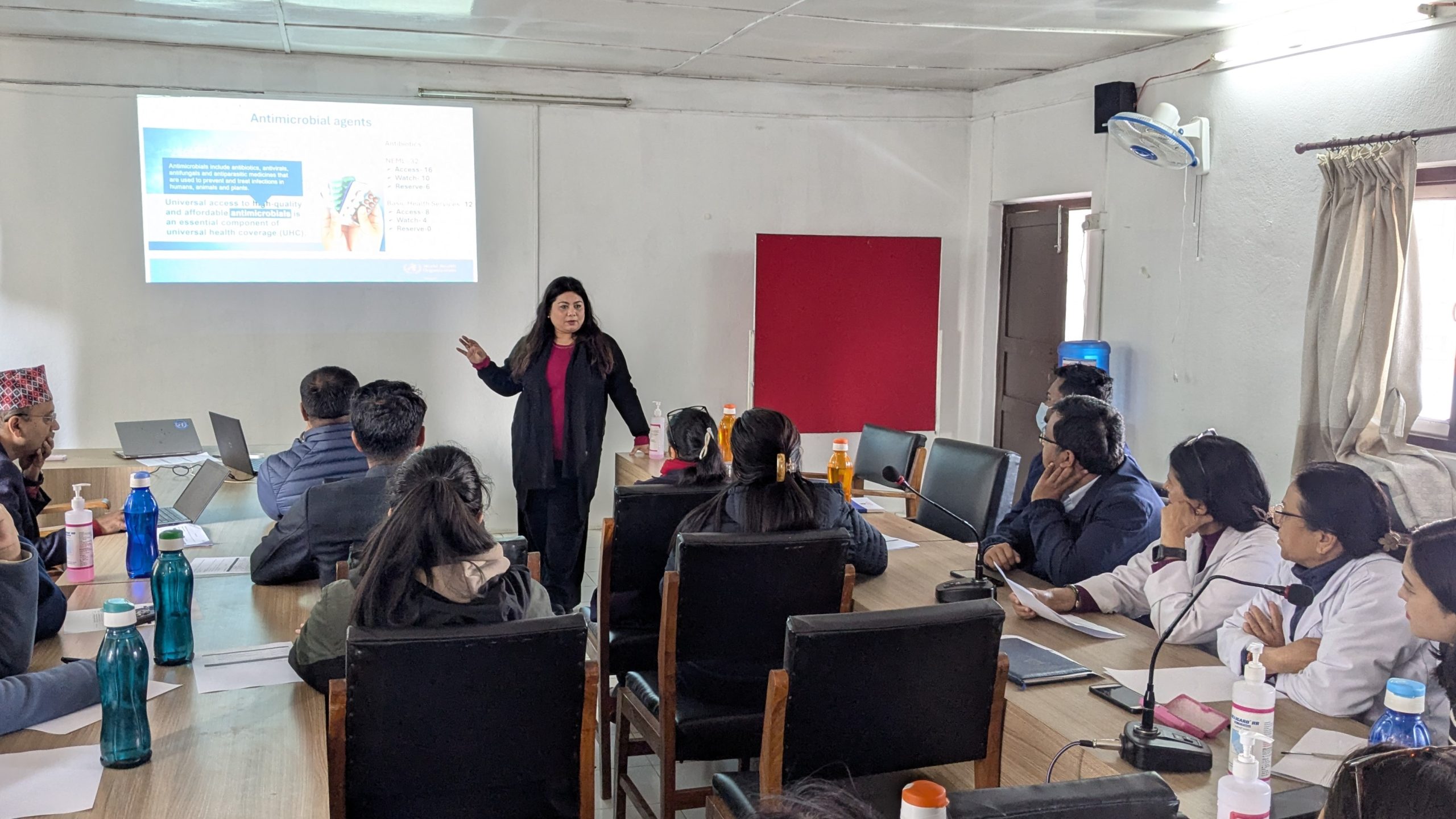
Kathmandu — With technical support from the World Health Organization Country Office for Nepal, a three-day orientation on the Antimicrobial Stewardship (AMS) Programme was successfully conducted at the Sukraraj Tropical and Infectious Disease Hospital from 16 to 18 February.
The orientation brought together more than 50 participants, including clinicians, nurses, hospital administrators and laboratory personnel. The programme focused on strengthening knowledge and practical skills related to antimicrobial stewardship, with emphasis on the AWaRe (Access, Watch and Reserve) classification of antibiotics, core AMS principles, and essential requirements for effective implementation at the institutional level.
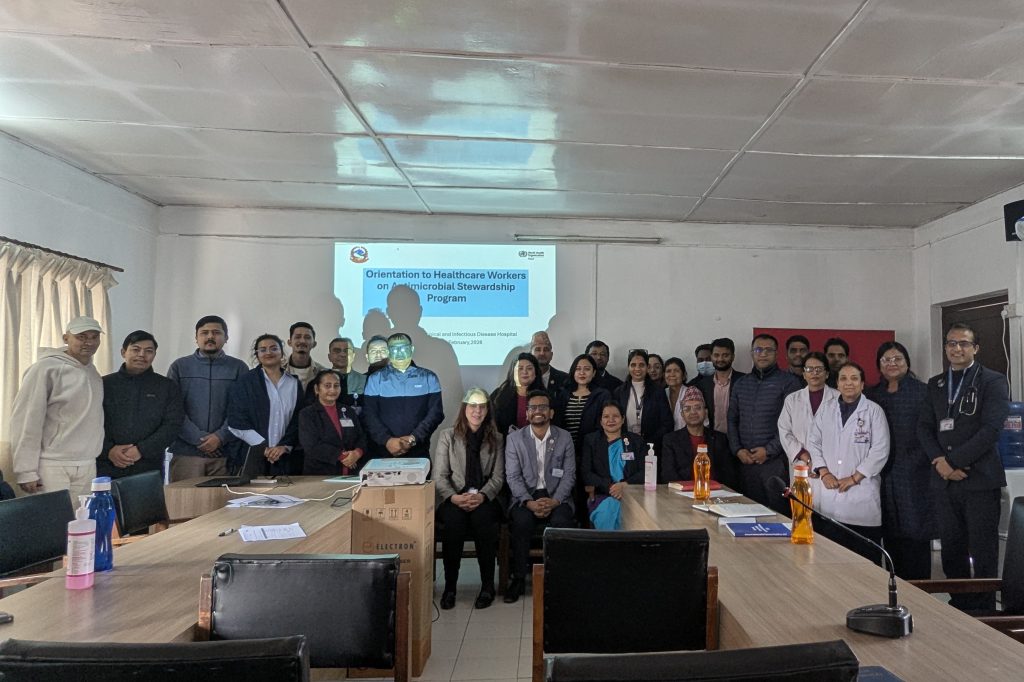
Participants were also oriented on the revised National Antimicrobial Treatment Guidelines, along with its mobile application version, aimed at promoting rational and appropriate prescribing of antibiotics in clinical practice. As part of the programme, attendees conducted an assessment of the hospital’s existing AMS status and collaboratively developed a draft institutional AMS workplan tailored to the hospital’s specific needs and service context.
The orientation forms part of the World Health Organization’s continued support to advance antimicrobial stewardship implementation in Nepal, contributing to the national effort to combat antimicrobial resistance and improve the quality and safety of healthcare services.

Happy

Sad

Wonderful

Excited

Angry