
Kavrepalanchok — Despite efforts to boost agricultural production in Kavrepalanchok, weak management of quality seeds and pesticides continues to directly affect farmers, stakeholders have said. Lack of coordination, regulation, and technical awareness is further complicating the issue.
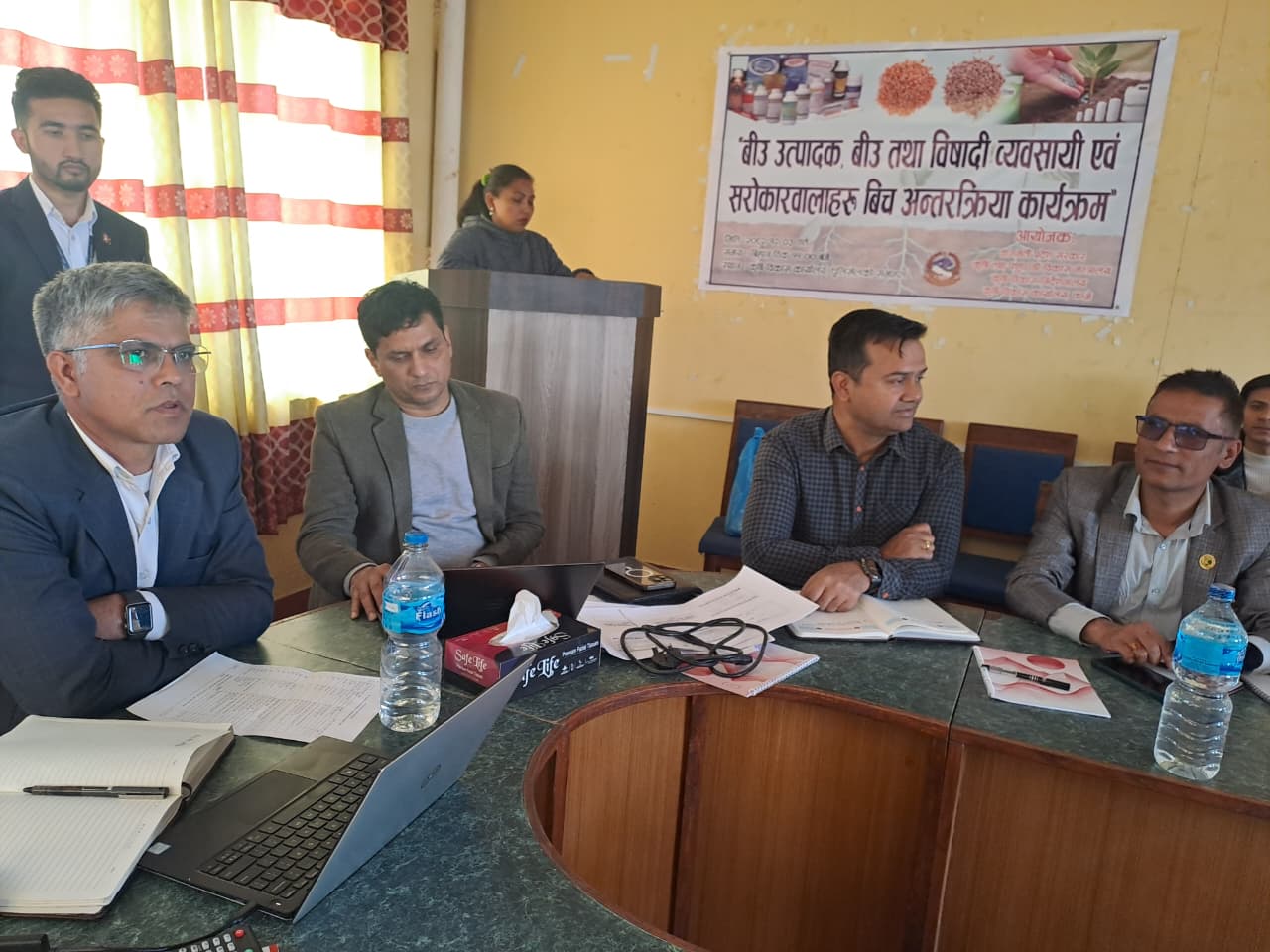
Speaking at an interaction program held at the Agriculture Development Office in Dhulikhel, participants stressed that improving production and quality is impossible without effective management of seeds and pesticides.
Chief of the District Coordination Committee Kavrepalanchok, Dipak Kumar Gautam, highlighted that unregulated and unscientific use of pesticides is causing serious harm to human health and the environment.
He stressed the need for stricter implementation of regulations. “It is worrying that unsafe practices are increasing in the name of boosting production,” he said.
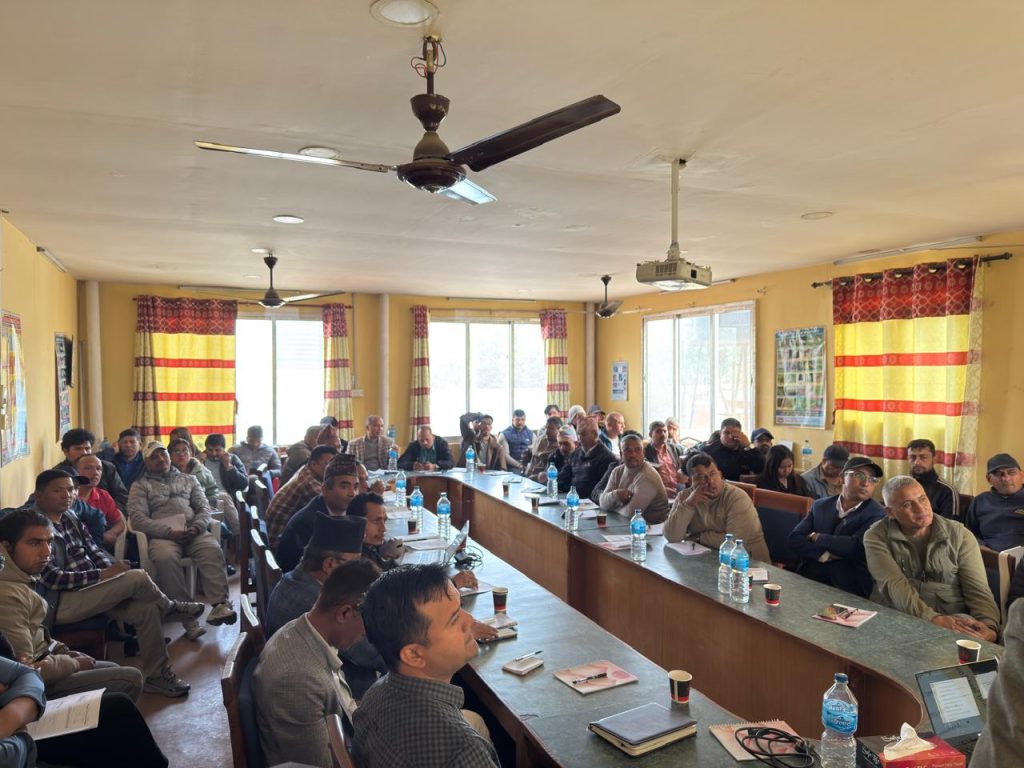
Similarly, Chief of the Agriculture Development Office Kavrepalanchok, Kul Prasad Dawadi, admitted that the distribution system of seeds and pesticides in the district is still poorly managed. “Farmers are suffering due to low-quality inputs,” he noted, emphasizing the need for stronger monitoring mechanisms.
Presenting key findings, Benu prasad Prasai pointed out that although Nepal has strong potential for domestic seed production, poor management and unclear policies have kept the country dependent on imports.
Senior Plant Protection Officer Manoj Pokhrel of the Plant Quarantine and Pesticide Management Center revealed that pesticide use in Nepal is steadily increasing. He stressed that misuse can only be controlled through stricter enforcement, awareness campaigns, and expansion of technical knowledge among farmers.
Participants from various institutions concluded that gaps across the supply chain—from seed production to market distribution—are limiting the potential of the agricultural sector. They emphasized the need for stronger collaboration between the government and private sector to ensure access to quality seeds and safe pesticide use.
Representatives from sericulture, horticulture, agricultural cooperatives, local governments, farmer groups, and technical agencies attended the program.

Happy

Sad

Wonderful

Excited

Angry